Hawking’s Party, the Cosmonaut’s 20 Milliseconds, and the Problem With “Now”

In 2009, Stephen Hawking hosted a party for time travelers and mailed the invitations after it ended. Nobody showed up. If you like your science with a clean punchline, you could stop there. Case closed: no guests, no time travel. But physics rarely gives you a satisfying ending on the first page. Hawking’s stunt is better read as a thesis statement: if time travel exists, it is not going to behave like a tourist attraction. It is going to be constrained by geometry, energy, and causality, the three things the universe cares about more than your sense of narrative closure.
Start instead with a quieter kind of time traveler, the kind who does not need a wormhole, a DeLorean, or a dramatic soundtrack. Russian cosmonaut Sergei Krikalev spent 803 days in orbit. Because he was moving fast enough for relativity to matter, he returned to Earth about 20 milliseconds younger than he would have been if he had stayed home.
Twenty milliseconds is not a cinematic reveal. It is, however, the crucial admission: time travel is not a fantasy genre. It is a measurable consequence of modern physics.
The real story is not “Can we time travel?” The real story is “Which kind of time travel, under which laws, without breaking the logical spine of the universe?”
The Universe Does Not Come with a Universal “Now”
Every time travel story begins with the same smuggled assumption: that the present is a single, shared slice of reality and the universe is politely updating it for everyone at once.
Relativity refuses this. In Einstein’s framework, spacetime is the thing. Time is not a master clock hovering above the cosmos; it is a coordinate woven into the same fabric as space. The equations do not label moments as past, present, or future. They simply describe how spacetime is structured.
That is why physicists end up flirting with the “block universe” idea: if spacetime is a four-dimensional object, then all events “exist” in the mathematical description. Einstein is frequently quoted here for a reason, because he said the quiet part out loud: the distinction between past, present, and future is “a stubbornly persistent illusion.”
But there is a philosophical itch that the block universe does not scratch. If the future is “already there,” why does the world feel like it is happening, not merely laid out? A hypothesis offers a compromise that reads like metaphysics with an engineering spec: a “growing block” universe in which the past is fixed, the present is the active boundary, and the future becomes real as uncertainty becomes certainty.
So, we can admit that our lived experience of time is psychologically loaded, while grounding the weirdness in the actual structure of modern physics.
Now let's pivot to the first hard truth.
Time Travel to the Future Is Real, Boring, and Ruthless
There are two mainstream ways to travel into the future, and both are already part of daily technology.
1) Go fast
The faster you move, the slower your clock ticks relative to someone at rest. Krikalev’s orbit added up to a tiny offset, but it was real.

This is not a “maybe.” It has been tested directly with atomic clocks. In 1971, Joseph Hafele and Richard Keating flew atomic clocks around the world and compared them with clocks that stayed on the ground. The flying clocks disagreed with the direction Einstein predicted.
Einstein proved that time is not linear with his discoveries of special relativity in 1905. He gives the time dilation formula, then basically says, "Do not solve it; understand the shape of it." As your speed approaches the speed of light, the effect ramps up brutally.
The ISS gives a popular example. Depending on which theory you use, you get different headline numbers, but the point is consistent: astronauts in orbit experience slightly less elapsed time than people on Earth.
2) Sit deeper in gravity
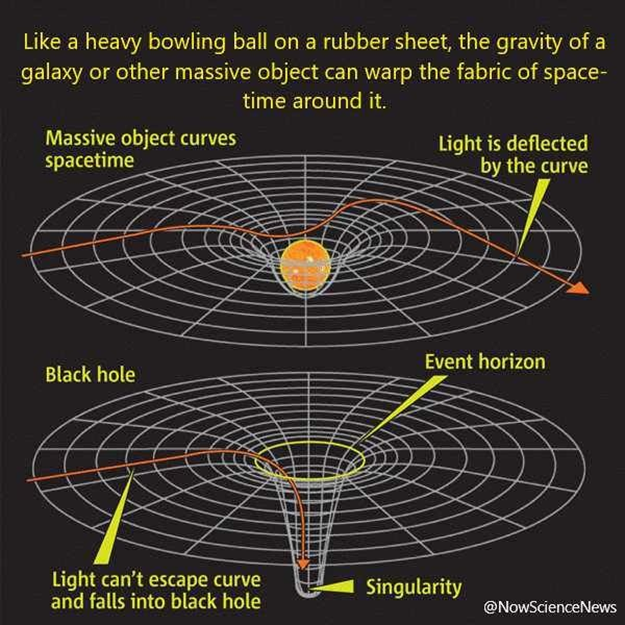
General relativity adds the second lever: gravity is spacetime curvature, and clocks tick differently depending on gravitational potential. In 2022, JILA researchers performed a simple, grounded test in which they found atomic clocks at different altitudes tick at measurably different rates.
Hollywood sometimes gets this right for the wrong reasons. Interstellar dramatizes gravitational time dilation near a massive object. In the movie time is dilated because of the huge gravitational pull from a black hole, Gargantua. Our discussion uses it as a vivid story hook, and it works because it points to a real effect.
The bottom line is the “future” is easy. Physics hands it to you. The only catch is the price. Going far enough to matter means either extreme speeds or extreme gravity, both of which are hostile to soft human bodies and our current engineering.
Which brings us to the kind of time travel people actually mean when they say the words.
The Past Is Where Logic Goes to Die
Backward time travel is not merely difficult. It is structurally toxic because it threatens causality.
In relativity, the relevant object is a closed timelike curve, a path through spacetime that loops back into a prior event. Einstein’s field equations emphasize this: general relativity admits solutions where such loops can exist under extreme conditions.
So the question becomes: what spacetime geometries might permit such loops, and what does it cost to build them?
Wormholes: the seductive loophole
Wormholes are spacetime shortcuts, and they appear naturally in math. The problem is that the wormholes that behave like “tunnels you can walk through” are not the kind the universe is known to keep lying around.
To hold a wormhole open, the physicists repeat the central requirement: exotic matter with negative energy density, a kind of gravitational anti-scaffolding. Quantum theory allows negative energy in constrained forms, so the idea is not pure fantasy, but we have no evidence of the stable, large-scale version you would need.
Even if you got that far, wormholes are described as fragile. Radiation, particles, tidal forces, or any of it could destabilize the throat.
And then there is the detail that ruins most “visit the dinosaurs” plots: you can only go back as far as the moment the wormhole was created. This matters, because it turns “time travel” from omnipotence into a constrained engineering artifact with a start date.
Tipler cylinder: when math says “allowed” and reality says “cute”
Frank Tipler’s rotating cylinder is the classic example of a general relativity time machine that collapses under its own premise. In the lecture version, the cylinder must be infinitely long to work cleanly. "Infinite length" is physics slang for “this solution is not a blueprint; it is a stress test for the equations.”
One theory tries to rescue it with a “finite ring” variant, a massive spinning structure that would twist spacetime enough to form loops, but it admits the obvious: you would need materials and precision we do not possess and likely additional exotic matter to keep it from collapsing.
Amos Ori’s donut: time travel with a power switch and a leash
Amos Ori’s proposal is described as a localized region of spacetime wrapped like a donut, manipulated by gravitational effects. The same leash appears again: you cannot go back earlier than when the machine was turned on.
If you want to sound like a modern physics graduate, this is where you stop promising miracles. General relativity’s permissiveness does not mean nature is obliging. It means classical equations do not automatically veto the idea.
Which is exactly where paradoxes show up, not as a storytelling trope, but as a quality control failure in the universe’s logical operating system.
Paradoxes Are Not Cute, They Are Catastrophic
The “grandfather paradox” is the famous one for a reason: it exposes inconsistency with a sledgehammer. If you go back and prevent your own existence, you create a contradiction.
Some of the lectures flirt with “self-correcting” timelines, the idea that the universe adjusts details to avoid inconsistency. That is narratively comforting and scientifically thin unless it is tied to a formal consistency principle.
A more interesting paradox is the bootstrap loop, where information appears without origin. One transcript leans into the deeper discomfort: maybe some causal chains have no external “first cause,” especially if time itself has a beginning, as in Big Bang cosmology.
Here is the thing I want all of you to feel in your bones: time travel to the past is not just a machine problem. It is an explanation problem. It threatens the very idea that events have coherent provenance.
And then the story hits its sharpest pivot, the one a modern physics student learns early: you do not even need a time machine to create paradoxes. You only need faster-than-light communication.
Faster-Than-Light Is a Time Machine in Disguise
There is a reason physicists tense up when someone says “warp drive” with the confidence of a man ordering coffee. Faster-than-light travel is not merely “hard.” It is causality breaking, in principle.
If we walk through this cleanly using a Minkowski diagram, time is on one axis and space is on the other, with light rays forming 45-degree “null” lines. In this picture, anything traveling faster than light lies outside the light cone, in a region where different observers disagree about the time ordering of events.
The concept builds a scenario: Earth sees a supernova and sends an FTL warning to Vega. In Earth’s frame, it looks harmless. Then you add a relativistic ship, because relativity’s relativity of simultaneity is where the knife twists. From the ship’s frame, Vega can receive a warning before the supernova even occurs. Cause follows effect.
Then the argument goes for the throat: let the ship reply with an FTL message telling Earth to turn off the transmitter, and you have constructed a grandfather paradox out of radio traffic. Any
This is the headline the public rarely gets told clearly: any general FTL signaling system is also a time travel machine, in the paradox-generating sense.
So, when someone sells you “FTL as engineering,” what they are really selling is “FTL plus a miracle that prevents causality contradictions.” That miracle has a name in your lecture set.
Chronology Protection, or the Universe Keeping Its Receipts
Hawking’s chronology protection conjecture, as presented in the lectures, is essentially the idea that the laws of nature prevent macroscopic paradoxes. Try to build a time machine, and some physical effect slams the door.
We can connect this directly to Alcubierre’s warp drive: even if you could shape spacetime into a “warp bubble,” quantum effects can generate enormous radiation that destabilizes the bubble. The key point is not the specific mechanism, but the logic: our missing theory of quantum gravity may be exactly where nature enforces the ban.
Notice the tone shift. Classical general relativity is permissive. Quantum reality is punitive. That is a recurring pattern in modern physics: classical math invites you to a party, quantum mechanics shows up and calls the fire marshal.
And yes, this is where you can write with hard-line skepticism without killing wonder. Wonder survives. Naivety does not.
The Most Human Time Machine Is a Freezer
After black holes, wormholes, and causality paradoxes, the most practical “time travel” program in your lectures is embarrassingly terrestrial: cryonics.
Cryonics is framed as one way to travel to the future by pausing biology. The lecture even names an iconic case: James Bedford, frozen in 1967. It is also brutally honest about the catch: we do not know how to revive a frozen human without catastrophic damage. So cryonics is not a time machine. It is a wager on future medicine.
But it earns its place in a serious article because it illustrates the real hierarchy:
Traveling to the future is physically real and technologically scalable if you can pay the energy and engineering bill.
Traveling to the past is mathematically allowed in some classical solutions but appears to demand exotic matter, extreme control, and paradox management that looks suspiciously like “nature probably forbids it.”
Faster-than-light is not just difficult; it is structurally corrosive to causality unless some deeper law prevents paradoxes.
Which brings you back to Hawking’s party.
Maybe nobody showed up because nobody could. Or because “time travel,” if it exists, is constrained, local, expensive, and legally terrifying for the universe itself. The lectures even offer mundane reasons: it might be imprecise, prohibited, risky, or restricted.
So, finally, where do we reach?
Time travel is not one question. It is a family of questions. One branch is real and already on your GPS satellites. Another branch may be mathematically open but physically barred. And the branch everyone wants, the one where you rewrite your past, is the branch most likely to be protected against, not by human laws, but by the universe’s refusal to tolerate contradiction.



Comments