What does the encroachment of the Buriganga river say about Dhaka city’s trajectory into consumerism?

Around the turn of the 16th century, the royal Mughals were worried about maintaining control of the region’s waterways against foreign forces. In an attempt to that, they would go on to develop what is now Dhaka, the capital of Bangladesh, centering their settlements around the Buriganga river, which was connected to the Bay of Bengal. After the Mughals had greater control of the waterways, the demand for Muslin consequently rose. The Muslin fabric trade flourished, and thus started the interwoven history of the Buriganga and fashion. The Buriganga was the hub for trade and life in a time when Dhaka was considered one of the most prosperous cities in the world. The popularity of Muslin started to decline, however, as British textiles and machine-made clothes became commonplace. With the region undergoing massive exploitation of its resources under both British colonialism (1757-1947) and the Pakistani regime (1947-1971), Bangladesh had to exchange production of Muslin, a luxurious fabric favored by the kings, simply because what else could sell more? Garment and other factories started to pop up on the banks of the Buriganga and release waste into the river. A major contributor of the heavy pollution was waste from the tanning and dyeing of leather. Bangladesh produces about 350 million square feet of leather each year, 80% of which was exported in 2019. Leather production has increased since then, but a smaller percentage, 60%, is being exported due to higher local demand. This is a sign of how Bangladesh is on track to graduate from the LDC (Least Developed Countries) category by 2026. An increasing number of people are entering the middle-income bracket with more disposable income with the prevailing mindset that less is not more. Unfortunately, most see this as a positive thing. processing this change as increased economic growth for the country, and while that may be partly true, it doesn’t do justice to the full picture. This has, in reality, led to an exacerbation of the country’s already chasmic wealth disparity. in the process of producing fashionable clothes for the ones privileged enough to buy them, workers gamble their lives, fated to only live till their 50s due to recurrent hours of toxic exposure. With no safety gear, they make direct contact with harmful chemicals and breathe in lime powders and sodium sulfites that could lead to life-threatening health issues, all to just be able to afford food.
With Bangladesh trying to meet demands of affluent foreigners and locals, 16 km of the Buriganga is now encroached with farms, real estate projects, factories, and business establishments. Hazaribagh, a neighbourhood built on the banks, accounts for 95% of the country’s tanneries, which release about 22,000 cubic litres of toxic waste into the Buriganga
every day. The rest of the river, around 25 km, still flows but only barely. Dissolved oxygen levels
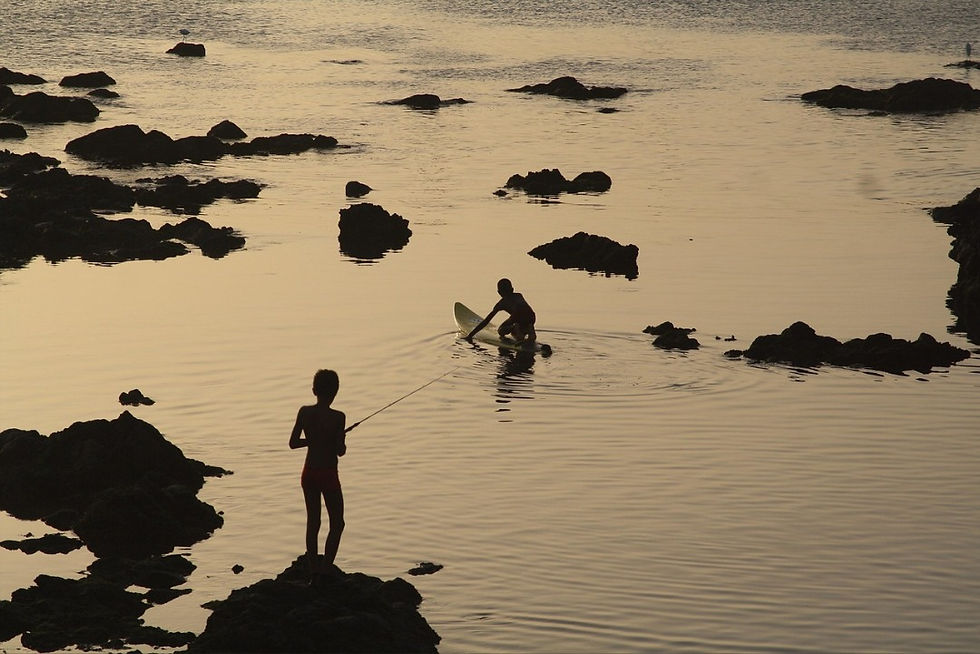
have plummeted over the past few decades to below 3 mg/liter, making it impossible for any aquatic life to survive. Buriganga has always been a way for locals to have a livelihood. Back in the day the river was full of life, the water providing an abundance of fish for fishermen to catch and sell, creating a colorful community full of hope for further development. Since then, the river has dwindled down to a desolate body carrying the memories of what it had once been. Despite turning into a toxic cesspool, the one thing that remains constant is its service to locals. The current world economy runs on the capitalist mindset of growth or, in other words, the need to buy and own more. Dhaka will not be left behind, regardless of the damage. The Buriganga will simply have to stand witness to this progress and, subsequently, its inevitable end.


Comments