Why the Weather Feels Different Now: Understanding Climate Change Through Lived Experience
Updated: Jan 19
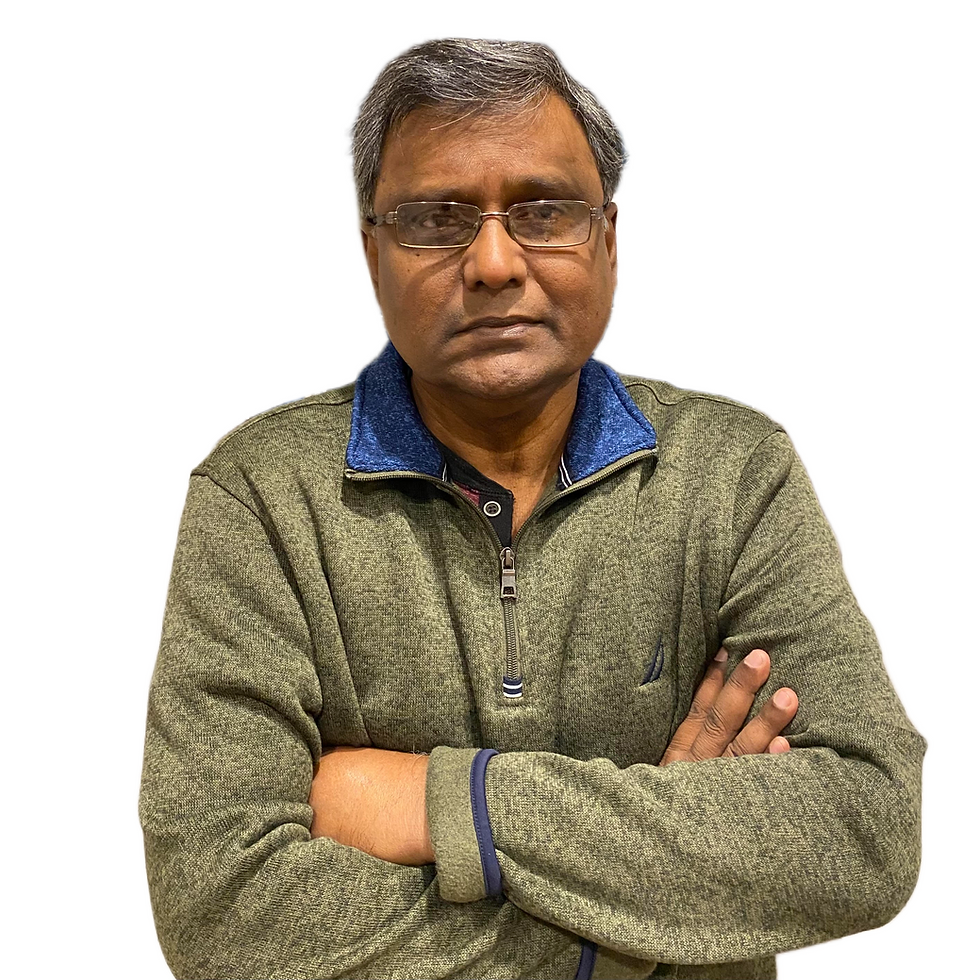
For this issue’s interview, we are honored to have Dr. Rashed Chowdhury, Applications Scientist - Water, Climate, and Society. Dr. Rashed Chowdhury is a climate scientist and research faculty member at Arizona State University (USA) who works at the intersection of water, climate, and society. His research is driven by a strong interest in applying climate science to real-world challenges. He is a 2021 U.S. Fulbright Teaching Scholar and a postdoctoral researcher at the International Research Institute for Climate and Society at Columbia University. Dr. Chowdhury earned his PhD in Urban and Environmental Systems from the University of Tsukuba in Japan. His work focuses on ENSO applications and developing climate early-warning systems that help communities across Asia and the U.S.-affiliated Pacific Islands better prepare for climate risks.
Najifa Alam Torsa: Before weather became your professional sector, can you recall a memory of your childhood about the seasons, how the seasons were then, and how they have changed now?
Dr. Rashed Chowdhury: Yes, I clearly remember a very special aspect of the weather from my childhood in Dhaka (Bangladesh), something that seems almost lost today, especially in city life. I’m not sure whether your generation can truly recognize it, but during our time, the early winter months from October to December were accompanied by a soft, soothing trade wind.
This easterly breeze, fondly known as “Moushimi air,” carried a quiet romance of its own. There was something deeply comforting and magical about it. Sadly, that gentle wind seems to have vanished with time in Bangladesh, which I enjoyed in Hawaii (USA) in recent years. I even traveled to rural Bangladesh, hoping to feel it once more, but I found no clear trace of its presence.
Winters back then were genuinely cold in Dhaka or Chittagong (I spent my early days in these two cities), wrapping us in a different kind of stillness and warmth of memory. Today, however, that chill and the feeling that came with it no longer seem the same. Also, we are witnessing more extreme events heat waves, heavy rainfall, floods, and droughts along with warmer cities caused by the urban heat island effect (particularly true in large cities in Bangladesh).
Najifa Alam Torsa: As weather is changing dramatically since a long time, which are the terms/condition of the weather and climate that the public should know to better understand the changes?
Dr. Rashed Chowdhury: That’s a thoughtful question. Since weather and climate have been changing noticeably over time, it really helps if the public is familiar with a few key terms and conditions.
There are differences between weather and climate and their impact on human activities. Weather refers to short-term variability in the rain, wind, snow, dryness, humidity, temperature, and conditions such as fog. It is difficult to predict the weather for three or four weeks.
Climate can be categorized into climate variability and change. Climate variability refers to changes in weather over months, seasons, and years. The variability results from natural, large-scale physical features such as temperature, pressure, winds, and interactions between the ocean, atmosphere, and land. Monsoons (wet and dry seasons) and other longer-term patterns include El Niño-Southern Oscillations (ENSO, El Niño and La Niña) and Indian Ocean Dipole (IOD). A basic awareness of these climate patterns is especially important today, as people are now focusing more on adapting to climate impacts rather than only trying to prevent them. At the very least, people should understand the role of ENSO, as it strongly influences rainfall, temperature, and extreme weather in many parts of the world, including Bangladesh and South Asia.
Climate change, on the other hand, refers to changes over time affecting physical processes in the climate system. Human activities such as greenhouse gas (GHG) emissions, urbanization, and natural area losses affect climate, climate variability, and weather patterns. The effects include changes to the components that affect climate and weather, exposure, vulnerabilities, and risks associated with weather and other hazards.
Najifa Alam Torsa: Can you shortly describe the historical change of weather over the decades?
Dr. Rashed Chowdhury: Over the past few decades, the weather I once knew seems to have quietly changed. I remember winters that were crisp and cool, summers that felt gentle, and rainfall that came in steady, predictable patterns. The seasonal winds had a soft rhythm, and the transitions from one season to the next were always clear almost like nature followed a familiar, comforting schedule.
But slowly, things began to feel different. Winters grew shorter and warmer, summers stretched longer and hotter, and the rains became unpredictable—long dry stretches would suddenly end with heavy downpours, bringing floods where there had been none before. Heat waves, storms, and extreme rainfall have become more frequent, and those small, familiar weather patterns of the past seem to have faded.
Even larger climate patterns have shifted. ENSO, which drives El Niño and La Niña events, used to appear every five to seven years. Strong events that once only showed up every 20 to 30 years now happen more often, roughly every 10 to 20 years, and milder events sometimes occur almost every year. These changes ripple through our seasons, making the weather feel less predictable and reminding us that the world we grew up in is slowly, noticeably transforming.
Najifa Alam Torsa: You have worked on El Nino, La Nina impact, ENSO and seasonal forecasting. How do you describe this to general people? How significant is this to understand for common people?
Dr. Rashed Chowdhury: I usually explain El Niño, La Niña, and ENSO like this: imagine the Pacific Ocean as a giant heartbeat that pulses with warm and cool waters. Sometimes it warms up more than usual this is El Niño and sometimes it cools down more than usual this is La Niña. These ocean “moods” send invisible signals through the atmosphere, and we feel them as changes in our weather heavier rains, longer dry spells, hotter summers, or colder winters. Scientists call this cycle ENSO, and it’s one of the main reasons why some years feel so different from others.
For ordinary people, understanding this is surprisingly useful. Farmers can decide the best time to plant or harvest, water managers can prepare for droughts or floods, and cities can get ready for heat waves or storms. Even just knowing that a season might be unusually wet or dry helps people plan their lives, protect their homes, and avoid surprises. In a way, ENSO is nature’s weather calendar it’s like learning to read the subtle signs before the storm or the sunshine arrives.
Najifa Alam Torsa: From South Asia to the Pacific’s, what common patterns do you see in how vulnerable communities experience weather differently from wealthier ones?
Dr. Rashed Chowdhury: From South Asia to the Pacific, the same storm can feel very different depending on where you live. In a wealthy city, heavy rain might mean a few wet streets and some traffic delays. But in a small village or a low-income neighbourhood, the same storm can destroy homes made of mud and tin, wash away crops, and leave families without food or clean water for weeks.
Heat waves and droughts tell a similar story. Farmers and fishers, who rely on the land or sea for their daily income, feel the impact immediately crops fail, fish vanish, and every day becomes a struggle to survive. Meanwhile, wealthier households can turn on air conditioning, buy bottled water, or stock up on supplies, softening the blow.
For example, based on my working experience across South Asia (Bangladesh, the Maldives), the U.S.-affiliated Pacific Islands, vulnerable communities experience weather and climate change more directly and intensely than wealthier ones because their survival, livelihoods, and culture are closely tied to the natural environment. Rising seas, stronger storms, droughts, and changing rainfall threaten homes, food, water, and sacred places, disrupting not just daily life but also traditions, history, and identity. These communities often contribute little to global climate change yet bear its heaviest impacts, relying on traditional knowledge, local adaptation, and community resilience to cope. In contrast, wealthier communities can buffer themselves with technology, infrastructure, and resources, experiencing fewer immediate cultural or existential disruptions.
Najifa Alam Torsa: Can you describe how the El Nino-La Nina impacts are affecting the weather patterns in South Asia, specifically Bangladesh?
Dr. Rashed Chowdhury: In Bangladesh, the impact of El Niño and La Niña is something people often feel in their daily lives. During an El Niño year, the heat lingers longer than usual, the skies stay dry, and the monsoon rains are weaker. Farmers watch nervously as their rice paddies struggle without enough water, and families worry about water shortages and hotter days. On the other hand, a La Niña year brings the opposite: heavy rains, swollen rivers, and the constant threat of floods. Villages near the rivers brace for rising waters, homes can be damaged, and crops that survived the planting season may wash away.
For ordinary people, these swings are more than just weather they affect livelihoods, food, and daily life. Understanding these patterns helps communities prepare storing food, managing water, and planning planting schedules. In Bangladesh, knowing whether an El Niño or La Niña year is coming can mean the difference between hardship and resilience.
Najifa Alam Torsa: In your eyes, do you see any gaps on current research on weather/meteorology that are hampering the way to bring out the actual scenario? If so, what are those and how those can be addressed?
Dr. Rashed Chowdhury: Yes, several gaps in current weather and meteorology research make it harder to fully understand and communicate what is really happening with our climate. One major gap is limited data in certain regions, especially in rural areas or small islands. In many rural areas or small islands, for example, there are few weather stations, so scientists don’t always know exactly how much rain has fallen or how rivers are rising. This makes forecasts less accurate for the communities that rely on them the most.
Extreme events like sudden floods, heatwaves, or cyclones are another challenge. We might know the season will be unusually wet or dry but predicting the exact day or intensity of a storm is still very difficult.
And even when science exists, it doesn’t always reach the people who need it. Farmers, fishers, and local families may hear a forecast, but without clear guidance on what it means for them, it can’t help them prepare.
Filling these gaps will mean more local weather observations, better forecasting tools, and stronger communication between scientists and communities. When that happens, forecasts won’t just be numbers, they will be practical, life-saving guidance that helps people adapt and protect their homes, livelihoods, and families.
Najifa Alam Torsa: After decades of studying the weather, has it changed your way how you see an ordinary rainy day or a clear sky?
Dr. Rashed Chowdhury: Yes, this is an interesting point. After decades of studying the weather, I no longer see a rainy day or a clear sky in the same way. What once felt ordinary now tells a story. When it rains, I notice not just the drops falling, but how the clouds formed, where the winds are coming from, and what this could mean for farmers, rivers, and communities downstream. A clear sky isn’t just beautiful it can hint at coming heat waves, dry spells, or even the start of a bigger weather pattern like El Niño.
In a way, studying weather has made me more aware and more connected to the world around me. Every change in the sky, every shift in wind or humidity, is a small clue about the larger story of our climate and it reminds me how deeply our lives are tied to the weather, even on an ordinary day.


Comments