Rhythms of Heritage: Community and Nature Through Kandyan Dance in Sri Lanka
On the night of 13th May in Kandy, I witnessed something far more meaningful than just a cultural show. At Sri Wasala Dance Show, music, rhythm and dance revisited us the aspects of nature, life, spirituality and history.
As the hall filled with the sound of traditional drums, dancers entered the stage wearing beautiful Kandyan costumes inspired by the era of ancient Sri Lankan kings. Every performance carried a story from Sri Lanka’s cultural heritage, and each dance reflected the close relationship between community, tradition, and nature.

The evening began with the sound of the conch in the performance called Jaya Sankaya. The powerful sound echoed through the hall, creating a sacred atmosphere. Traditionally, the conch is played during important religious and cultural ceremonies to symbolize blessings, celebration, and good fortune.
After that came the Magul Bera Wadanaya, which means its rhythm was produced with drummers on the stage. The drums beat as if they contain life and were the heartbeat of the performance. In Sri Lankan culture, drums are seen as ceremonial symbols that bring people together, rather than just being a musical instrument.

The Peacock Dance or the Mayura Wannama is one of the most graceful of all performances. The dancers moved gracefully, embodying the beauty and majesty of a peacock. Watching this dance, I realized that Sri Lankan culture has a huge connection to nature. Ancient communities keenly observed animals, then translated those movements into dances.

The connection with nature appeared again in the Pantheru Natum, where dancers performed with movements inspired by strength and courage. Another striking performance was the Naga Raksha dance, which symbolized protection and spiritual power through serpent-inspired movements and costumes.
The performance called Pooja & Devol Netuma carried a spiritual atmosphere. It reflected ancient ritual traditions connected to blessings, healing, and worship. These dances showed how traditional Sri Lankan communities once used performance not only for entertainment but also for spiritual and social ceremonies.

The Raban Netuma was another unforgettable part of the evening. Dancers balanced and played the traditional raban drum while moving gracefully together. The performance highlighted coordination, patience, and harmony within a group qualities that are deeply important in community life.
The dancers also performed Wes Natuma, one of the most respected Kandyan dance traditions. The detailed costumes, headpieces, and movements reflected royal heritage and centuries of cultural preservation.
But one of the most memorable moments of the evening happened unexpectedly.
During one performance, a dancer suddenly invited audience members onto the stage. He called me and a few other foreigners to dance with the performers. At first everyone seemed shy and nervous, unsure of what to do. But within moments we were all laughing, dancing, and trying to follow the rhythm together.

I found it incredible how quickly strangers became acquainted with each other. We came from different countries, spoke in various languages, and had never met before. Yet dance broke the ice instantly. We were connected by the rhythm. For a few moments, it felt like we’d known each other for a ages. That moment showed me the power of culture. Dance is not only performance but also connection. It creates joy, removes barriers, and brings people together.
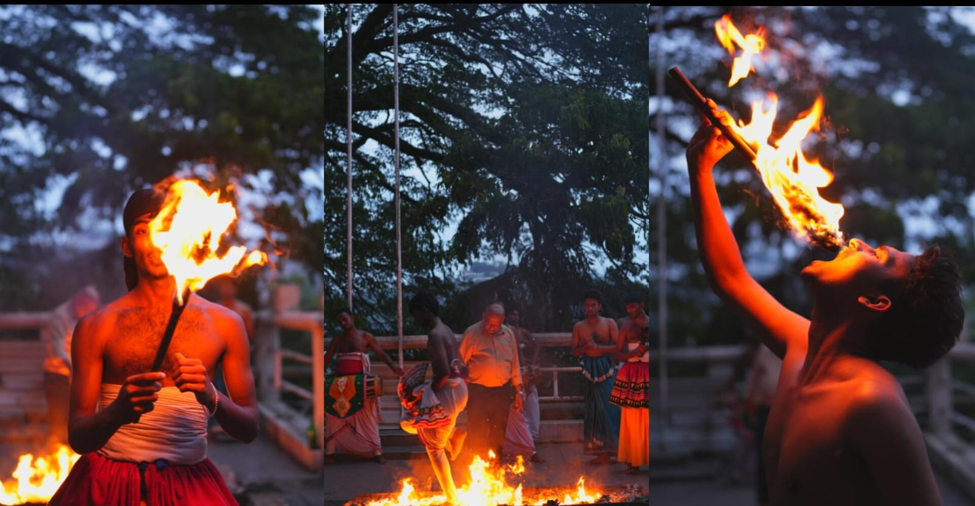
As the evening continued, the excitement in outside the hall grew stronger until the final and most thrilling part of the show began: The Fire Dance, The performers entered carrying burning fire sticks, spinning flames through the darkness with incredible skill and confidence. They walked fearlessly with fire, tossed the flames into the air, and controlled them with astonishing precision. At one moment, the dancers even touched the burning fire sticks with their tongues, leaving the audience completely shocked and amazed.
The fire reflected across the dancers’ costumes while the drums grew louder and faster. The performance felt intense, powerful, and almost magical.
The fire dance symbolized courage, discipline, and mastery developed through years of practice. But it also represented something deeper, the ancient respect humans once had for natural elements like fire, earth, water, and wind.
Throughout the entire evening, I realized that these dances are more than cultural attractions for tourists. They are living memories carried through generations. Every drumbeat, costume, mask, and movement preserves stories of kings, rituals, healing traditions, spirituality, and community life.
In today’s fast-changing world, where many traditional practices are disappearing, performances like this remind us why cultural heritage matters. They help younger generations stay connected to their roots while allowing visitors to understand Sri Lanka beyond beaches and sightseeing.
For me, this was not simply a dance show.
It was an evening where history breathed through movement, where nature inspired art, and where strangers became connected through rhythm and laughter.
Sometimes community does not begin with conversation. Sometimes it begins with a drumbeat, a shared dance, and a moment of joy under the glow of fire.
A special thanks to Sohan Ahmed for capturing these beautiful moments so perfectly through his lens. His photographs did more than preserve memories they captured the energy, emotions, colors, and spirit of the performances in a way that truly brought the experience to life. Each picture reflects not only the beauty of the dance but also the connection between culture, people, and tradition that made the evening so unforgettable.


Comments