UN Charter at 80: Rights, Nature, and the Breakdown of Global Order

Updated: Sep 22
Eighty-one years since its signing on 26 June 1945 in San Francisco, the United Nations Charter remains the constitutive document of the international order after World War II. Drafted in the age of catastrophe with more than 70 million casualties, the United Nations Charter put forward noble goals: maintaining international peace and security; developing friendly relations among nations; cooperation in solving economic, social, cultural, and humanitarian problems; and respect for human rights and fundamental freedoms.

Its preamble reflects the faith "in fundamental human rights, in the dignity and worth of the human person," while Article 1(3) concerns itself with international cooperation in solving problems of an economic, social, cultural, or humanitarian character and in "promoting and encouraging respect for human rights and for fundamental freedoms for all without distinction as to race, sex, language, or religion." Additionally, Article 55 and Article 56 describe steps towards promotion of higher standards of living, solutions to international economic, social, and humanitarian problems, and universal respect for human rights.

However, within the age of the Anthropocene with the climate breakdown, destruction of biodiversity, and wars resulting from resources competition; as well as the repeated failure of nation-states in protecting their citizens or ecosystems as the precondition of human life, the United Nations Charter proves to be significant historically and structurally flawed. It is the product of its age – anthropocentric, state-centered, and not mentioning the ecology or the sovereignty of nature. The gaps in the United Nations Charter are not accidental but represent the worldview, which sees nature as the resource for the development of humans and states but not as the sovereign entity with the inherent rights to thrive.
Human Rights Protection Contributions to the Charter
The greatest contribution of the Charter is the inclusion of the matter of human rights into the purposes of international order for the first time in history in the form of near-universal treaty. Though vague references allowed ratification by the ideologically different states (including the Soviet Union and colonial powers), it provided the normative background for the development of 1948 Universal Declaration of Human Rights and later International Bill of Human Rights.

It contributed to the decolonization; the notion of self-determination (Article 1(2)); anti-apartheid movement; the development of international human rights law, monitoring institutions, and accountability mechanisms. Furthermore, the collective security system despite its weaknesses managed to prevent the third world war between great powers for 80 years – quite impressive result considering half-century of industrial warfare beforehand. The emphasis on sovereign equality (Article 2(1)) and peaceful resolution of disputes (Article 2(3)) established benchmarks of evaluation of state behavior.
Amendments were minor and procedural – enlargement of the Security Council from 11 to 15 members in 1965 and changes in the size of ECOSOC but unrelated to the basic purposes or new rights provisions.
Human Rights Protection Gaps in the Charter
The human rights provisions of the Charter were relatively weak institutionally. There are no definitions, enforcement mechanisms, or individual petition rights. The domestic jurisdiction clause (Article 2(7)) allowed internal repression during decades, while the right of veto in the Security Council by five permanent members blocked any reaction to mass atrocities in case of involvement of permanent member's interests. Economic and social rights (mentioned in Article 55) received less attention in their development compared to civil and political rights due to Cold War ideological confrontation.
From philosophical point of view, the Charter combines the natural law tradition of human dignity with positivism and state consent. The conception of human natural rights as pre-political inherent entitlements based on human dignity and worth receives representation but not adequate protection from state power or transnational economy. Hence, the Charter establishes excellent framework for norm declaration but not effective enforcement and transformation.
The Complete Silence about the Sovereignty of Nature
There is not any recognition of the sovereignty of nature in the Charter and no ecological constraints on human or state actions. Nature is considered to be just the base for "higher standards of living" and "economic and social progress" (Article 55), which illustrates the extractive-growth paradigm of 1945. There are no concepts of ecosystems, biodiversity, intergenerational equity, planetary boundaries, or nature's sovereignty anywhere in the document.
Such gap is extremely important as the further actions of the UN in relation to this issue, 1972 Stockholm Conference and establishment of UNEP; 1982 World Charter for Nature (non-binding General Assembly resolution acknowledging the necessity of respect for essential nature's processes); 1992 Rio Earth Summit and treaties (UNFCCC, CBD); Harmony with Nature program, have been carried out parallel to the Charter but not amended it.
Even the 2022 recognition by the UN General Assembly of the human right to a clean, healthy, and sustainable environment is anthropocentric, as the human right to nature's services and not the recognition of the sovereignty of nature. Some national initiatives tried to fill the gaps of international Charter. For instance, the 2019 decision of the High Court of Bangladesh (on appeal), which declares all rivers as living entities with legal personality and rights to protection, flow, and regeneration, and appoints the National River Conservation Commission as river guardian, is the pioneering juridical act in the area of nature's sovereignty based on the public trust doctrine and constitutional provisions. Such initiatives illustrate the inadequacy of international Charter.
Missed Opportunities
The greatest missed opportunity is the failure to incorporate the matters of ecological integrity and sovereignty of nature into the purposes of the Charter both at its formation time or during the reform process. Warnings from scientists about environmental limits had already been sounded by the 1970s, but no amendments were made in order to elevate sustainability and sovereignty of nature to the constitutional level. The state-sovereignty model (and Article 2(7)) and veto politics of the great powers make such transformations extremely difficult.
Climate change is an illustration of the problem. The language of "threats to the peace" (Article 39) and conflict-prevention role of the Security Council can be utilized to address climate change, but the attempt to recognize climate change as the threat to international peace and security was opposed. The 2021 draft resolution on security implications of climate change was vetoed. It illustrates the reluctance of the states to expand the mandates of the UN.
Hence, the Charter provides tools for the creation of specialized regimes (UNFCCC, Paris Agreement) but not the constitutional framework incorporating peace, human rights, and sovereignty of nature.
Relevance in the Age of Changed Global Climate Systems, Conflicts, and Failed States
The Charter remains relevant precisely because many current crises take place in the form of threats to peace and security. Climate change acts as the threat multiplier, worsening the security of water and food, causing displacement of people and conflicts in the Sahel, Horn of Africa, and other regions. The low-lying and climate vulnerable nations, including Bangladesh, face the existential threats, which could not be foreseen in 1945.
But the state-centered and consensual structure encounters difficulties in managing the global commons. The atmosphere, oceans, and biodiversity do not fit the classical model of state sovereignty. The nation-states, the subjects and duty bearers of the Charter – fail often due to fossil fuel lock-in, corruption, repressions of environmentalists, or inability to manage transboundary ecological damage. The sovereignty norms protect both the responsible and irresponsible states.
The growing conflicts, great-power rivalry, proxy wars, intra-state wars, and hybrid threats – challenge the Charter. The prohibition on the use of force (Article 2(4)) and the mechanism of collective security operate only in violation by powerful states. The non-implementation of Article 43 standing forces and chronic underfunding of prevention indicate the structural problems.
The Enduring Framework and the Need for Adaptation
The United Nations Charter has made immense contribution to the stabilization of interstate relations and formation of the language of universal human rights. But the gaps of the Charter – especially, the absence of the ecological constraints and sovereignty of nature, weak protection against violation of sovereignty, and inability to deal with transnational existential threats, gain increasing importance. Within the age of crossed planetary boundaries and human-nature interdependencies, the anthropocentric and state-sovereigntist document drafted in 1945 cannot fully respond to the demands of justice, survival, and prosperity.
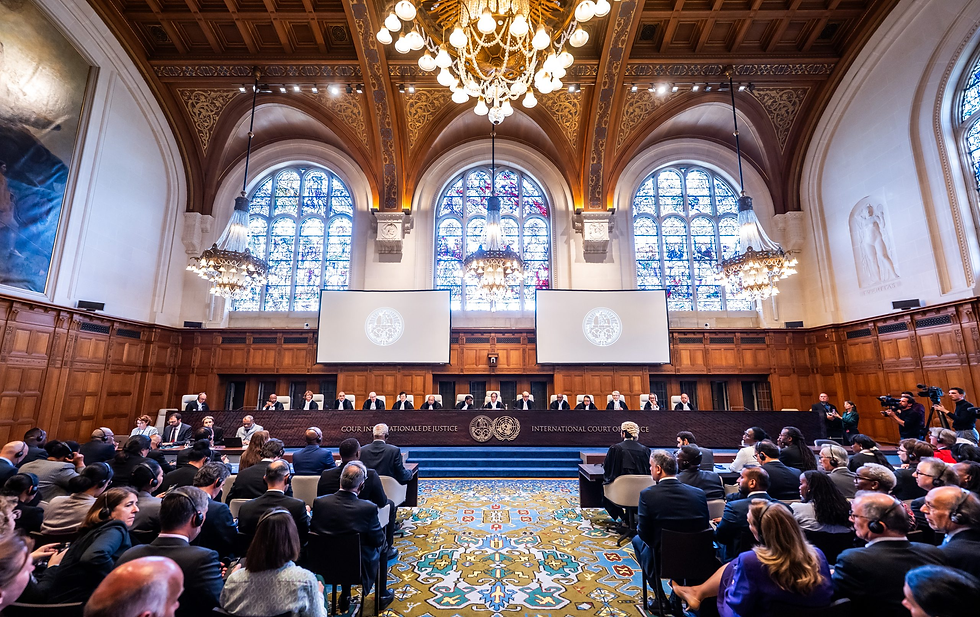
The International Court of Justice in July 2025 issued an advisory opinion, in which all judges unanimously recognized that there were mandatory obligations under international law, not merely discretionary ones, for protecting the climate system from human intervention, based not only on the provisions of the Paris Agreement but on the principles of customary international law and human rights. The court concluded that climate change had the effect of infringing on the right to life, health, a standard of living, and the right to have a family and home, and therefore environmental protection was a prerequisite for human rights fulfillment. Moreover, it recognized non-refoulement obligations with regard to individuals forced to flee from climate-uninhabitable territories and also recognized that ongoing licensing of fossil fuels and subsidization of fossil fuels could be considered internationally wrongful acts giving rise to reparations.
Ten months after that, on 20 May 2026, the UN General Assembly took this into account and adopted a Vanuatu-led resolution 141 votes to 8 implementing the findings of the ICJ. The resolution urges states to stop subsidizing fossil fuels, fulfill their non-refoulement obligations with regard to climate-displaced people and pay reparations for climate damage, reiterating the importance of just transition and equity. For low-lying and vulnerable countries like Bangladesh, it means that now there is more legal backing to pursue financing, protection, and accountability through international institutions.
Reinterpretation of the existing provisions (broadening "threats to the peace" to climate security risks; strengthening preventive diplomacy) is the short-term option. But in the long run, the adaptation may require additional institutional layers or even Charter amendment, even if it is politically difficult at the moment. The modern approach recognizing the sovereignty of nature along with human natural rights, empowerment of community stewards and guardians, and focus on ecological integrity along with peace and dignity provide the direction of necessary evolution.
The moral and legal authority of the United Nations Charter is preserved, but its adequacy for the challenges of the next eighty years will depend on the ability of the international community to evolve beyond its 1945 limitations to the new holistic governance paradigm, which acknowledges both the dignity of the human person and the sovereignty of the living planet Earth.


Comments